Four accounts of this village and its pubs, from different hands and different decades, agree on something none of them set out to say. For a hundred years, the bar of a Cuddington pub was a place for men.
The earliest voice is an invented one. In a piece about the Red Lion, Peter Wenham writes as Walter, a farm labourer born in the village in 1805. Walter is imagined, and so is everything he says, but Wenham has built him from what is known of the village, and he has a complaint to make. There is, Walter says, “constant criticism from our wives, that they do not feel really welcome or comfortable in the pub.” His own wife is only too ready to restrict his drinking. His wage is by no means princely. And the Baptist preacher at Dadbrook has delivered many a powerful sermon against the evils of excessive drinking. Some families, Walter adds, preferred The Crown or one of the other public houses to the Red Lion, because they were open on a Sunday.
Walter also gives us the first hint of the story this piece turns on. Of the Red Lion’s landlady, Annie Bailey, he reports that a few people had gone so far as to suggest the pub should be renamed in her honour. Most, he says, thought it a ridiculous idea, since “only Queens should have that right”. Again, this is Wenham’s imagining. But Thomas and Annie Bailey were real. They kept the Red Lion from 1853 to 1877, and Annie, who came from a well-known Cuddington family, the Roadnights, is buried with her husband in the churchyard.
The first real witness is Alice Miller, born in 1903, whose family, the Woodfords, kept The Crown from 1887 to 1943, her father Albert from 1905. In a short memoir written in 1991, as the Cuddington Historical Society summarises it, she noted that most village women did not visit The Crown. Those who did were usually older villagers, who often came in by the back door and gathered in the kitchen. Alice knew the building from the inside. As she grew older, it fell to her to scrub the stone flag floors in the morning.
By the time Sonny Rose took over in 1943, little had changed at the front of the house. Wenham, drawing on the recollections of Lil Arnott, records the same pattern: women rarely came, although a few called in on a Saturday night with their menfolk. Behind the bar it was another matter. The pub was a family business with no paid staff, and Sonny’s wife Edith and their five daughters all took turns serving. Lil Arnott, a villager living nearby, helped at weekends and on some evenings.
“Women rarely came although a few called in on Saturday night with their men folk.”
Peter Wenham, Glimpses of Cuddington’s Past, on The Crown in the 1940s and 50s
The pub Walter knew as the Red Lion had its own ending, and its own reversal. In 1991 new landlords renamed it Annie Bailey’s, in honour of the Victorian landlords. What Walter’s neighbours thought absurd in the 1850s came to pass more than a century later. The pub closed in 1999, and it is now a private house.
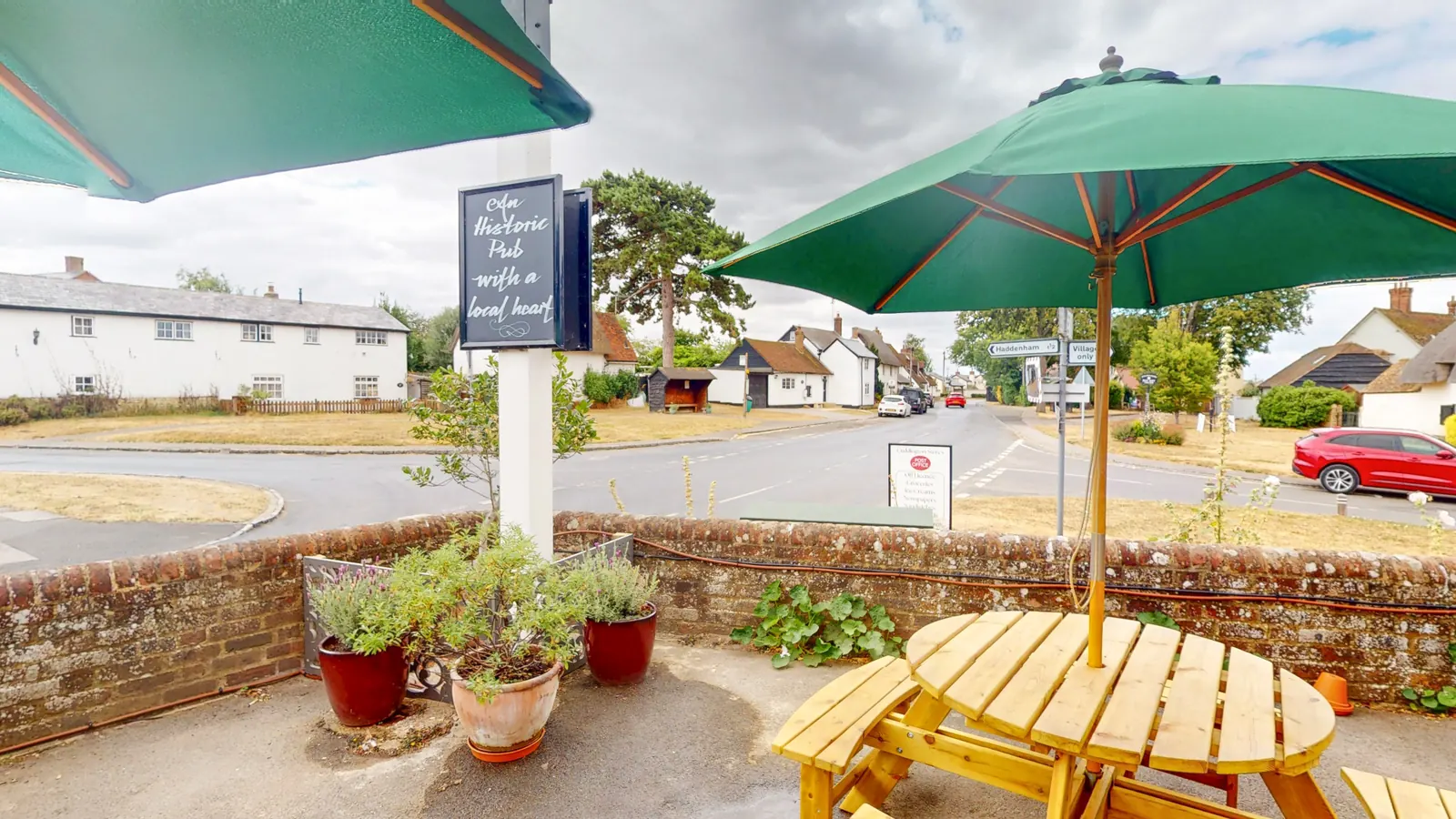
The Crown outlasted all of them. Today it is owned by more than two hundred shareholders from the community that bought it, and it is the only pub left in the village. It belongs to the whole village now, women and men alike.
Sources
Alice Miller, The Village of Cuddington of a Bygone Age, 1991, as summarised in “A Village Childhood: Alice in Cuddington”, Cuddington Historical Society.
Peter Wenham, Glimpses of Cuddington’s Past, with recollections of Lil Arnott.
Peter Wenham, Public Houses in Cuddington.
Peter Wenham, Cuddington’s Red Lion, a historical reconstruction.
Drawn from accounts by Peter Wenham and the Cuddington Historical Society, rearranged and reworded for this page. Short quotations from Peter Wenham are marked as his. One racial nickname used of a villager has been left out.