The last pub standing
Cuddington had four public houses at the beginning of the twentieth century: the White Swan, the Seven Stars, the Red Lion and The Crown. In Victorian times there had been more still.
The Swan stood on Aylesbury Road, seventeenth century, witchert walls under thatch, with a spacious yard and stabling for the carrier wagons, stage coaches and pack horses that came through the village. Aylesbury Brewery Company bought it in 1895. By 1911 it had stopped being a pub and become a private house. It stands today as Swan House, its walls rebuilt almost entirely in brick and its roof tiled.
The Seven Stars was also on Aylesbury Road. Frederick Dormer was landlord by 1911, a dairy farmer who sold milk in the village alongside the beer. By the early 1920s he had turned it into a private residence.
The Red Lion, built around 1756, had begun life as The Five Bells and took its new name in 1786. It held only a six day licence because it stood next door to St Nicholas, so families who wanted a drink on a Sunday came to The Crown instead. In 1991 new landlords renamed it Annie Bailey's in honour of the Victorian landlady who had run it from 1853. It closed in 1999 and became a private house.
Three of the four are somebody's front room now. The Crown is the fourth, and the oldest of them, and it is the only one where you can still buy a pint.
From alehouse to village pub
The Crown is believed to have begun life as an alehouse, brewing its own beer on the premises. By the eighteenth century it was a well-established inn. An inventory from the period describes two parlours, four bedchambers, a cellar and a spacious barn. Like many publicans of the time, several landlords combined the inn with another trade. Robert Green, who ran The Crown between 1841 and 1861, was also a carpenter. His son George Green, born at The Crown, went on to become one of Cuddington's most successful businessmen.
The Crown and village life
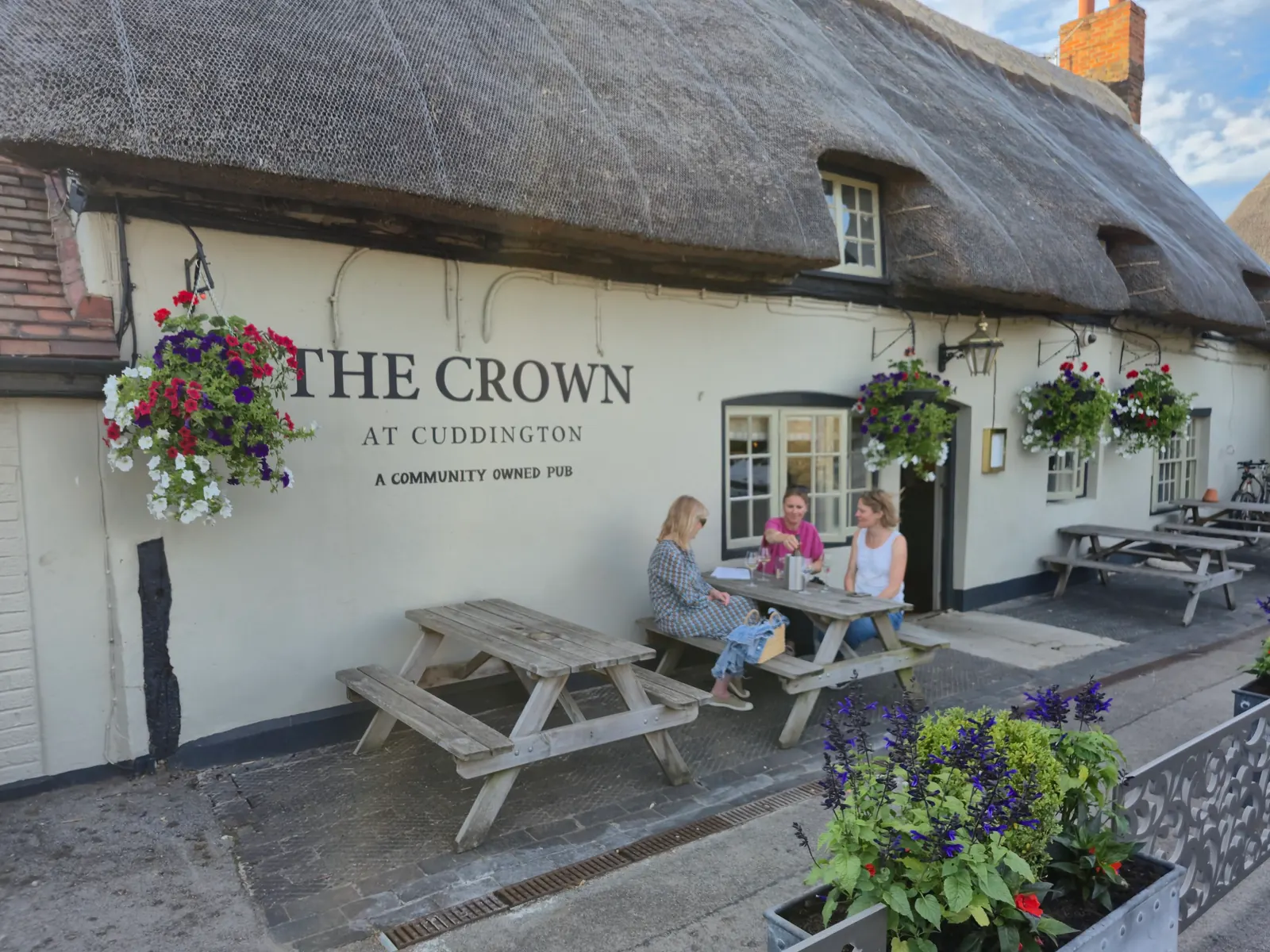
The Crown has always been more than a place to enjoy a drink. For many years it was a hub of village activity: parcels carried by the Oxford Bus Company were collected and distributed here, local sporting groups gathered before heading into the countryside, and neighbours met to share news and company.
The Woodford years, 1887 to 1943
For fifty six years The Crown was kept by one family. The Woodfords took it on in 1887, and Albert Woodford was landlord from 1905 until 1943.
Albert's daughter Alice was born in 1903 and grew up in the pub. She left the village school at thirteen and later wrote down what she remembered of it. Her account is the only description we have of The Crown from someone who lived inside it, and it is worth more than any deed or licence record.
She remembered a dark building that filled up and grew loud at the busy hours. She remembered scrubbing the stone flags before opening, carrying water from the well, washing glasses in the smell of stale beer, and clearing the hearth ready for the next fire. She remembered the men rapping on the partition wall when they wanted their glasses filled again, dominoes and cribbage and shove penny after a day in the fields, the handbell ringers who came into the tap room before Christmas, and the brewery draymen arriving with wooden barrels on a horse drawn cart.
Alice married a village builder in 1923 and moved to Holly Tree Lane in 1928, where she lived for the rest of her life. She died in 1995.
Alice's account, and three more from the village archive, in From the Archive.
The Sonny Rose years
One of The Crown's most memorable landlords was Sidney "Sonny" Rose, a former Coldstream Guard and First World War veteran who took over in 1943. Thanks to the recollections of local resident Lil Arnott, we have a vivid picture of those years: a pint cost a shilling, the landlord did every calculation in his head, and a second-hand pianola provided the entertainment for a sing-song. Sonny was a respected and popular landlord who shared his customers' love of gardening, fishing and shooting.
A new chapter
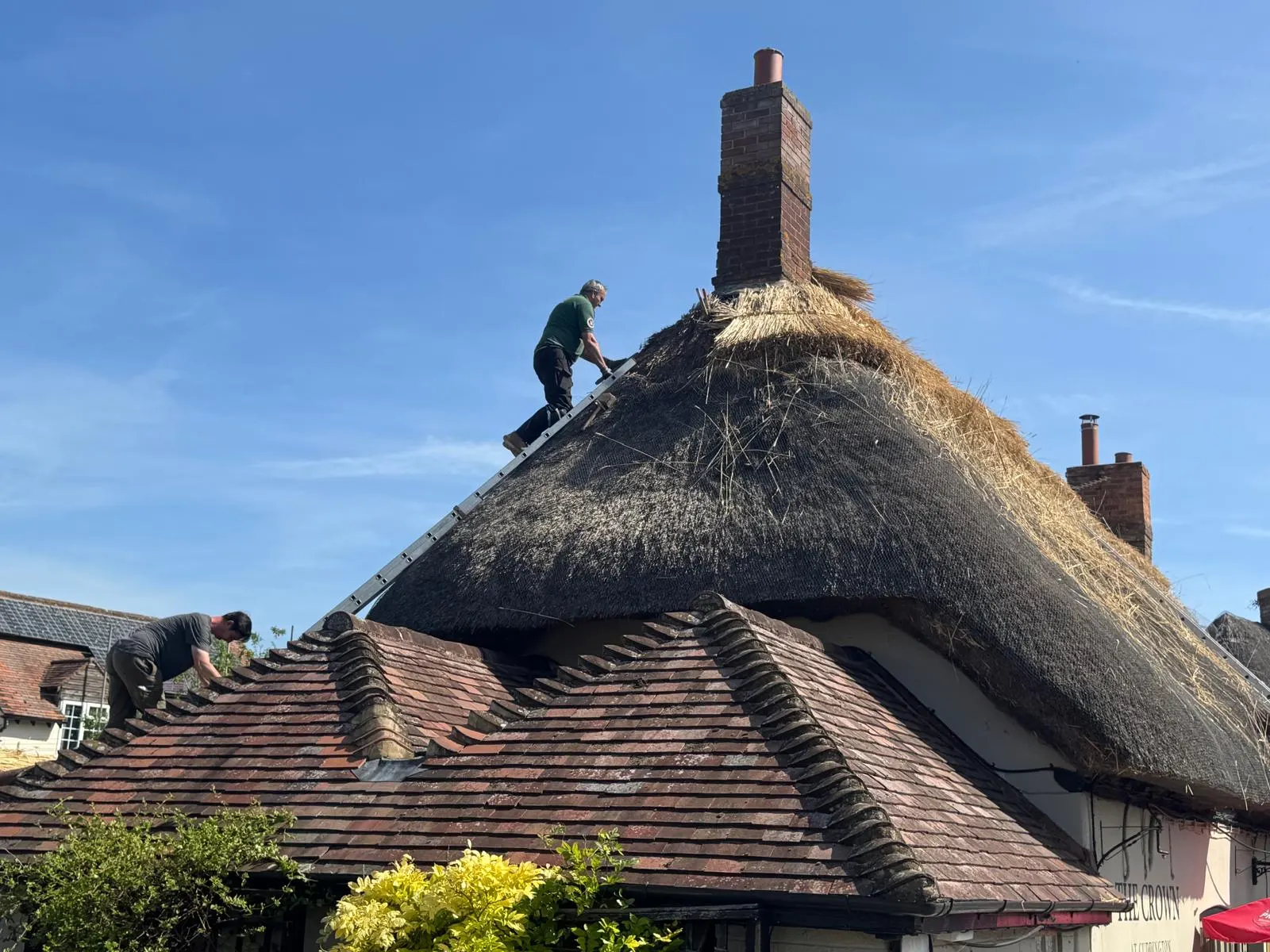
Over the centuries The Crown has witnessed enormous change. Coaches gave way to cars, horse-drawn deliveries disappeared, and many neighbouring pubs closed for good. Yet The Crown remains. When the pub faced an uncertain future, the people of Cuddington came together to save it, raising £660,000 in just six weeks to purchase it and secure its future. Today The Crown is community owned, cared for by more than 200 shareholders and supported by volunteers, staff and customers. The Crown belongs to the community that rallied to save it, and still does what it always has: it brings people together.
Still here
Community owned pubs are, it turns out, remarkably hard to kill. Roughly nine in ten community owned businesses in the UK are still trading over the long term, and for community owned pubs specifically the survival rate is higher still. The village did not need a report to work that out. It had watched three of its four pubs become houses.
With thanks to Peter Wenham of the Cuddington Historical Society.